


Durham Agricultural Advisory Committee (DAAC) hosts annual annual farm tour
BRANDON CLARK The Standard
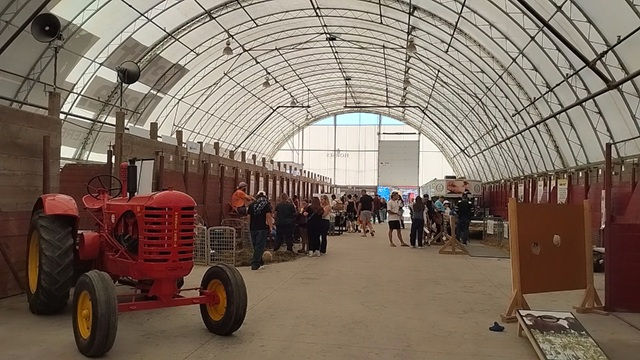
NORTH DURHAM: On September 17th, the Durham Agricultural Advisory Committee (DAAC) held their annual farm tour, where they showcase the importance of Durham Region's agricultural history. The tour is designed to educate politicians, government officials, and key stateholders on the importance of farming and the major role it plays in Durham Region. In addition to the farm tour, the DAAC held a presentation from keynote speaker Brock Dickinson, where he talked about tariffs and their impacts in the agricultural sector.
Mr. Dickinson began his career with the United Nations, working on development projects in over 30 countries. In 1995, he became the youngest secretary general in United Nations history, leading an international development summit as part of United Nations 50th anniversary celebrations.
“Never has the economy been more uncertain in Canada than it is today. And that uncertainty makes it really hard for businesses to navigate” Mr. Dickinson explained.
Mr. Dickinson discussed the repercussions of tariffs. He noted how potatoes were difficult to export across the border, as too many were grown for the domestic market. Revenues and sales dropped for farmers, in addition to market opportunities being uncertain.
“Remember, back to a little over a year ago, you would go into a grocery store. You couldn't find a head of lettuce anywhere, right? We just couldn't find them. I was getting phone calls from companies all over Canada,” Mr. Dickinson continued.
Mr. Dickinson explained, lettuce had come in from the United States, with difficulty, due to Canada's counter tariffs. He mentioned how Canada imposed counter tariffs on American agricultural products, after the first round of tariffs in the United States, making it more expensive for American farmers to send products north. This opened space for Canadian farmers to consider producing products like fresh fruits, cereals, rice, and dairy.
“As we think about the impacts of these tariffs, it changes the way the agricultural economy works. And so we need to look at a new mix of products. We also need to ensure regulatory support [such as] land use, planning, and zoning” Mr. Dickinson explained.
“If we're going to shift production to things like greenhouses, is that really something we're ready for, at an infrastructure level, practical level [and] within our community?” Mr. Dickinson mentioned, Canada is not the only country struggling with American tariffs. Costco, in Mexico, has pivoted away from American beef to Alberta beef.
“We want to be a better partner,” Mr. Dickinson said, “We want to be more stable in the way we approach things. In the midst of these big challenges and big changes we face ahead of us, in the midst of all this noise and data, there's at least some positive signs, to make me feel good, about where we get to in the midst of all of this.”


Comments